
Manual Therapy
Hands-on joint and soft tissue work: when manual therapy helps, when it doesn't, and how Seremban physios combine it with exercise.
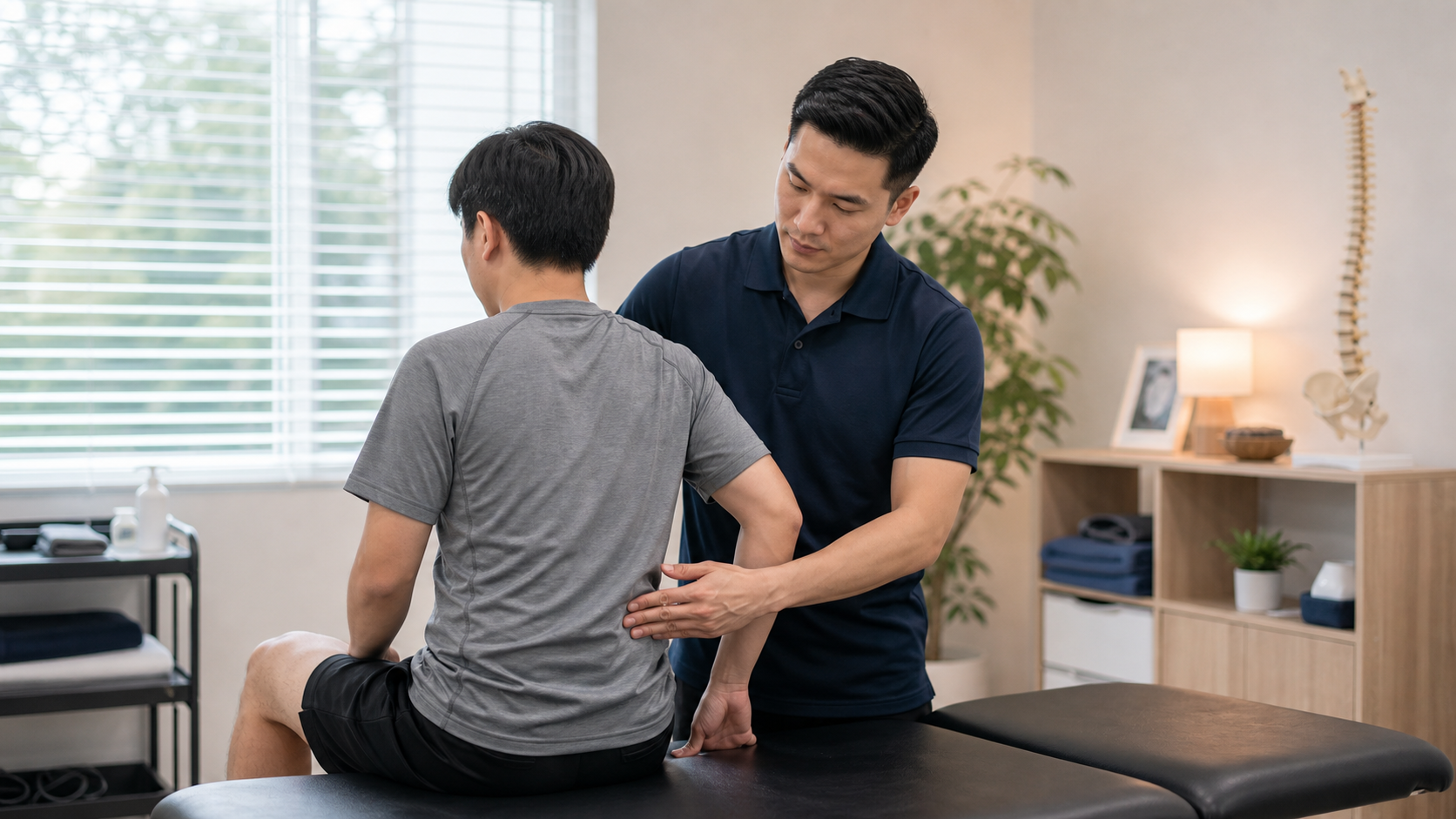
Manual therapy is the hands-on part of physiotherapy: joint mobilisation, soft tissue release, and specific hands-on techniques that a trained physio uses to settle a painful area so the exercise programme can do its real work.
It's widely used in Seremban and Nilai across conditions (neck pain, back pain, frozen shoulder, post-surgical stiffness) and it's an art: some physios are genuinely skilled at it, others less so.
We match you on WhatsApp to a Seremban or Nilai physio whose approach fits your case.
Not every problem needs manual therapy; but for acute flare-ups, stubborn joint stiffness, and certain headache patterns, it's often the difference between a productive first session and a wasted one.
The mix of daily Seremban–KL commuters with stiff necks, Senawang shift-workers with tight backs, and Seremban Chinatown seniors with frozen shoulders is what our matched clinics see most.
What manual therapy actually includes
'Manual therapy' covers a family of techniques:
- Joint mobilisation: graded, controlled oscillations at a stiff joint to restore range (Maitland, Mulligan are the common schools)
- Joint manipulation: a brief, specific, high-velocity low-amplitude thrust, often with the classic 'click' (used carefully: not every case or practitioner)
- Soft tissue techniques: trigger-point release, myofascial release, deep tissue work to settle tight muscles
- Neural mobilisation (nerve gliding): gentle techniques for nerve-related pain, sciatica, tennis elbow
- Muscle energy techniques, PNF stretching, specific holds and releases
- Craniocervical and thoracic techniques for cervicogenic headache
- Scar mobilisation post-surgery (from KPJ Seremban Specialist Hospital, Columbia Asia Seremban, Mawar Medical Centre)
Good physios select techniques based on the clinical presentation, not on a one-size-fits-all massage approach. A session often combines 15–20 minutes of manual work with exercise prescription and home programme.
What a manual therapy session looks like
First session 45–60 minutes, RM 80–150 in a Seremban or Nilai private clinic. The session won't be pure manual therapy: expect a blend of clinical assessment, hands-on work, and exercise teaching.
Expect: a history and examination to identify exactly where and why you hurt; hands-on assessment of the joint and surrounding soft tissue; one or two targeted manual techniques applied carefully; re-assessment of range and pain after the technique; and exercises that build on the gain.
Good physios measure before and after each technique so you can feel the change: if it doesn't help, they switch approach.
A lot of Seremban and Nilai physios also send video clips of the home exercises on WhatsApp so you can check form between sessions.
Manual therapy alone rarely produces lasting change: it's the opener for the exercise-driven recovery.
When manual therapy helps, and for how long
Manual therapy is most effective when combined with exercise. Expected patterns:
- Acute neck or back flare: 2–4 sessions of combined manual therapy + exercise to get past the painful phase; then exercise-led recovery
- Frozen shoulder (freezing + frozen stage): manual therapy across the course; typically a component of most sessions alongside range work
- Cervicogenic headache: often 6–12 sessions with manual therapy as a significant component
- Post-surgical stiffness (knee, hip, shoulder): scar mobilisation and joint mobilisation part of every session
- Chronic back / neck pain: small, consistent manual therapy input alongside a real progressive-loading plan
What manual therapy can't do: produce long-lasting change without exercise follow-up, 'realign' the spine (bones don't go out of place; clicks happen because gas releases in the joint), or substitute for graded loading.
A clinic offering only manual therapy with no exercise is missing the main engine of recovery.
When manual therapy is appropriate (and when it isn't)
Manual therapy is likely appropriate if:
- You have a painful, stiff, mechanically-driven problem (neck, back, shoulder, hip)
- Acute flare-up where pain is limiting what you can do
- Post-surgical stiffness with surgeon's clearance for mobilisation
- Cervicogenic headache
- Stubborn chronic pattern where exercise alone isn't shifting the needle
Go to A&E at Hospital Tuanku Ja'afar, not a manual therapy clinic, if any of these appear: sudden severe neck or back pain after major trauma, sudden numbness in the saddle region or loss of bladder control, progressive limb weakness, severe chest pain radiating to neck/arm, fever with stiff neck, or any suspected fracture.
Manual therapy is NOT appropriate for acute nerve-compression cases with progressive neurological signs, cancer in the spine (if the pain is unexplained and unrelenting at night, this is a medical work-up first), recent fracture not yet cleared, or infection.
A good physio screens for these and refuses to manipulate if anything is off.
📍 Find manual therapy physio near you →
Questions people ask
- What's the difference between manual therapy and massage?
- Manual therapy is diagnosis-led and specific: the physio identifies exactly what joint or tissue is driving the problem and applies a specific technique to that. Massage (generally) aims for overall relaxation or muscle tension relief. Both have value; they're just different tools.
- How much does manual therapy cost in Seremban and Nilai?
- Part of a standard physio session, so RM 80–150 first visit, RM 60–120 follow-ups in a private clinic. There's no separate 'manual therapy' charge at most clinics: it's folded into the physio session.
- Is manual therapy the same as chiropractic?
- No. Both use hands-on techniques, but the professions are separate. Physiotherapists are registered under MAHPC (Malaysian Allied Health Professions Council) with a movement-based, exercise-integrated approach. Chiropractors are a separate profession with a different primary philosophy (spinal alignment). Some techniques overlap, the training and scope don't.
- Will manual therapy 'click' my back: is that safe?
- A high-velocity manipulation that produces a click can be safe in the right hands for the right problem. It's not for every case: acute disc problems, nerve symptoms, or suspected fracture. A good physio screens carefully and uses mobilisation (slower, controlled movement) for many cases instead.
- I've had 6 sessions of manual therapy and no improvement: should I switch?
- Yes. If six sessions haven't produced measurable change, repeating the same approach isn't going to work. Either a different technique, a different physio, or escalation to imaging / specialist review at KPJ Seremban Specialist Hospital, Columbia Asia Seremban or Hospital Tuanku Ja'afar. WhatsApp us and we'll suggest a second-opinion option.
Not sure which physio fits your case?
Message us on WhatsApp with your condition and area: we'll suggest a physio in Seremban or Nilai that matches.